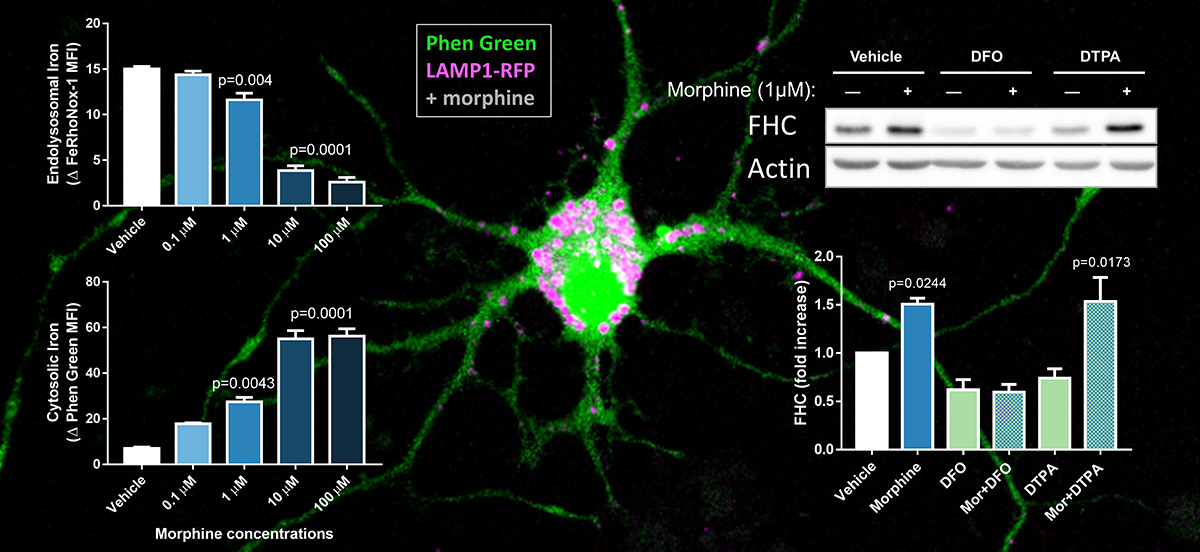
 In collaboration with Dr. Jonathan Geiger’s lab at the University of North Dakota, the Meucci lab recently published a new study describing how iron contributes to opioid-induced morphological changes in cortical neurons. Interestingly, morphine caused the release of iron stored in neuronal endolysosomes to the cytoplasm, which led to a post-transcriptional upregulation of the iron storage protein ferritin heavy chain. Increased ferritin heavy chain levels in these neurons was associated with a reduction of dendritic spine types that are thought to play important roles in learning and memory. Morphine-mediated dendritic spine deficits and ferritin heavy chain upregulation were completely blocked by selective chelation of endolysosomal iron, suggesting that these iron stores could be a new therapeutic target for opioid-using people at risk for developing cognitive impairment.
This study is featured and freely available in eNeuro, an open-access journal of the Society for Neuroscience.